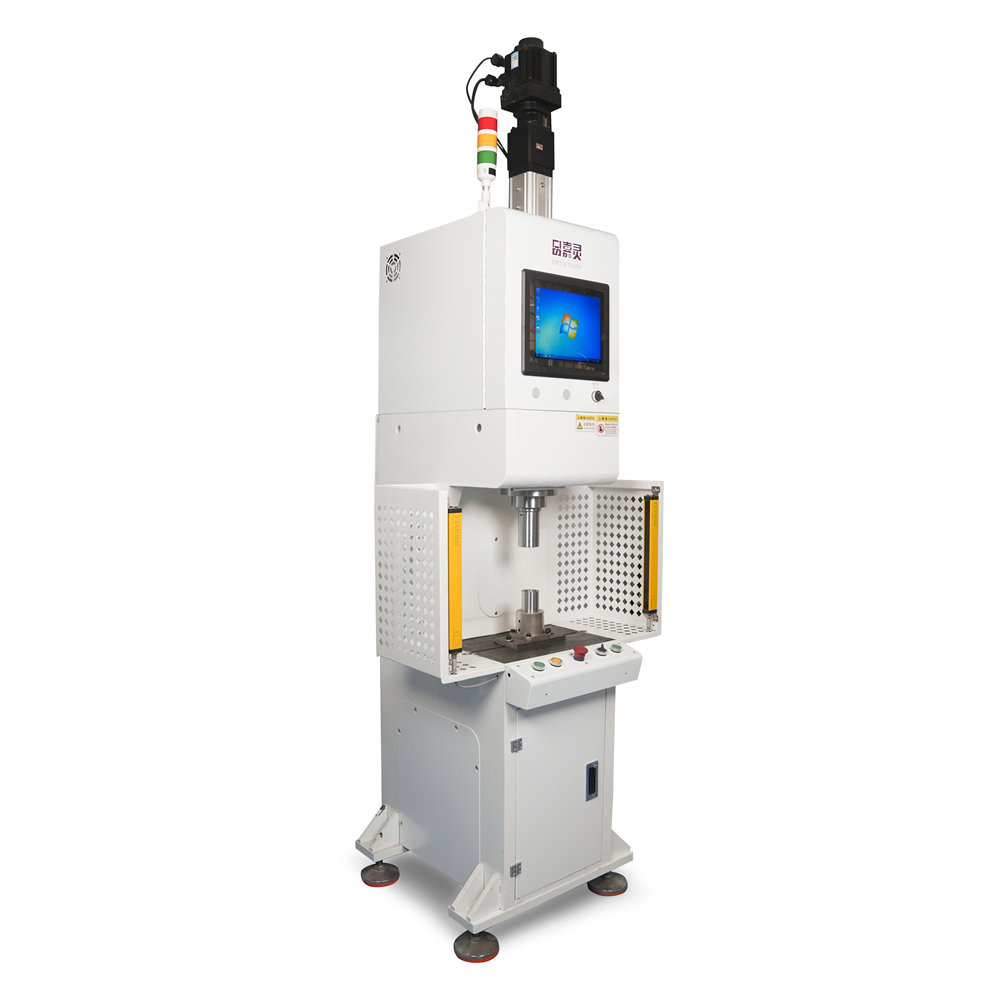
Sproeiventiel KST-810P product


The FAQ is regularly updated to reflect the latest information and to ensure that you have the most accurate details at your fingertips.
Thank you for choosing us, and we hope you find the answers you need!
- What safety precautions should I follow when operating a servo press machine?
When operating a servo press machine, it is important to follow all safety protocols, including wearing appropriate personal protective equipment, using safety guards and devices, and obtaining proper training on the machine’s operation. Additionally, only trained and authorized personnel should operate the machine.
- Which shipping way can you provide?
We can provide shipping by sea, by air, by express and etc according to customer requirements.
- What is Servo Riveting Machine?
Our servo riveting machine is a kind of automated equipment used for the process of riveting. Riveting is a permanent fastening method that joins two or more materials together using a rivet, which is a metal pin with a head at one end. The rivet is inserted into pre-drilled holes in the materials to be joined, and then the other end is deformed or “headed” to secure the materials in place.
- Do you have an inspection procedure for the product?
Yes, We have a strict inspection of product quality and packing.
- What is a servo press machine?
Guangdong pinjialing Intelligent Technology Co. , Ltd is a professional to servo pressing, Precision coating and Related Equipment R & D and manufacturing as one of the modern technology-based companies. Servo press machines consist of many components, including a servo motor, servo driver, lead screw, PLC, touch screen, timing pulley, timing belt, guide rod, bearings, power switch, and thermal protection.
- What is Motorcycle engine cradle servo press?
Manual auxiliary loading and unloading of the cradle, automatic loading of the bushing, automatic installation of the pivot tube rubber sleeve, and automatic pressure installation of the bushing.
The equipment mainly consists of: casting frame, automatic loading and unloading system, multi-station turntable, servo pressing system, human-computer interaction system, safety protection system and other parts.
- What is a servo linear actuator mechanism?
The servo motor is directly connected with the transmission screw of the electric cylinder, so that the encoder of the servo motor directly feeds back the displacement of the moving piston of the electric cylinder, which reduces the inertia and clearance of the intermediate link, and improves the control and control accuracy.
- What is a Desktop Servo Riveting Machine?
Desktop Servo Riveting Machine are high-torque machines. They are able to produce the output pressing force with full energy at any point of an operation.
- What is Double Station Turntable Servo Riveting Machine?
The Double Station Rotary Table Servo Riveting Machine consists of a cast body, a double station rotary table, a servo riveting system, a human computer interaction system, and a safety protection system.
- What is the accuracy of the servo press?
Positioning accuracy: (mm) : ±0.01
Pressure Accuracy (%F.S): 0.5
Displacement resolution (mm) : 0.001